Gummy Bear Stew

George is a legitimate Oregon outdoorsman.

He fishes. He crabs. He hikes. He hunts.

And he is the inventor of Gummy Bear Stew, which like all good ideas, was born from a mix of necessity and ingenuity.

Last summer, George took his son Jack and his nephew Hayden on a weekend camping trip. They unpacked the tent, the clothes, the sleeping bags and the camp stove. Then they unpacked the beer and the gummy bears and rested.

They are male, after all.

When George went back to unpack the food for dinner, he realized that somehow his keys had gotten locked in his truck.

He could have called his wife Angie, but it was getting dark.

So first, he built a fire. Then he drank some more beer. Then he cut the tops off the cans and turned them upside down.

He melted the gummy bears in the bottoms of the cans, stuck a spoon it in and called it dinner.

If you’re thinking Ewwwwww, I’m with you.

But the children must be fed.

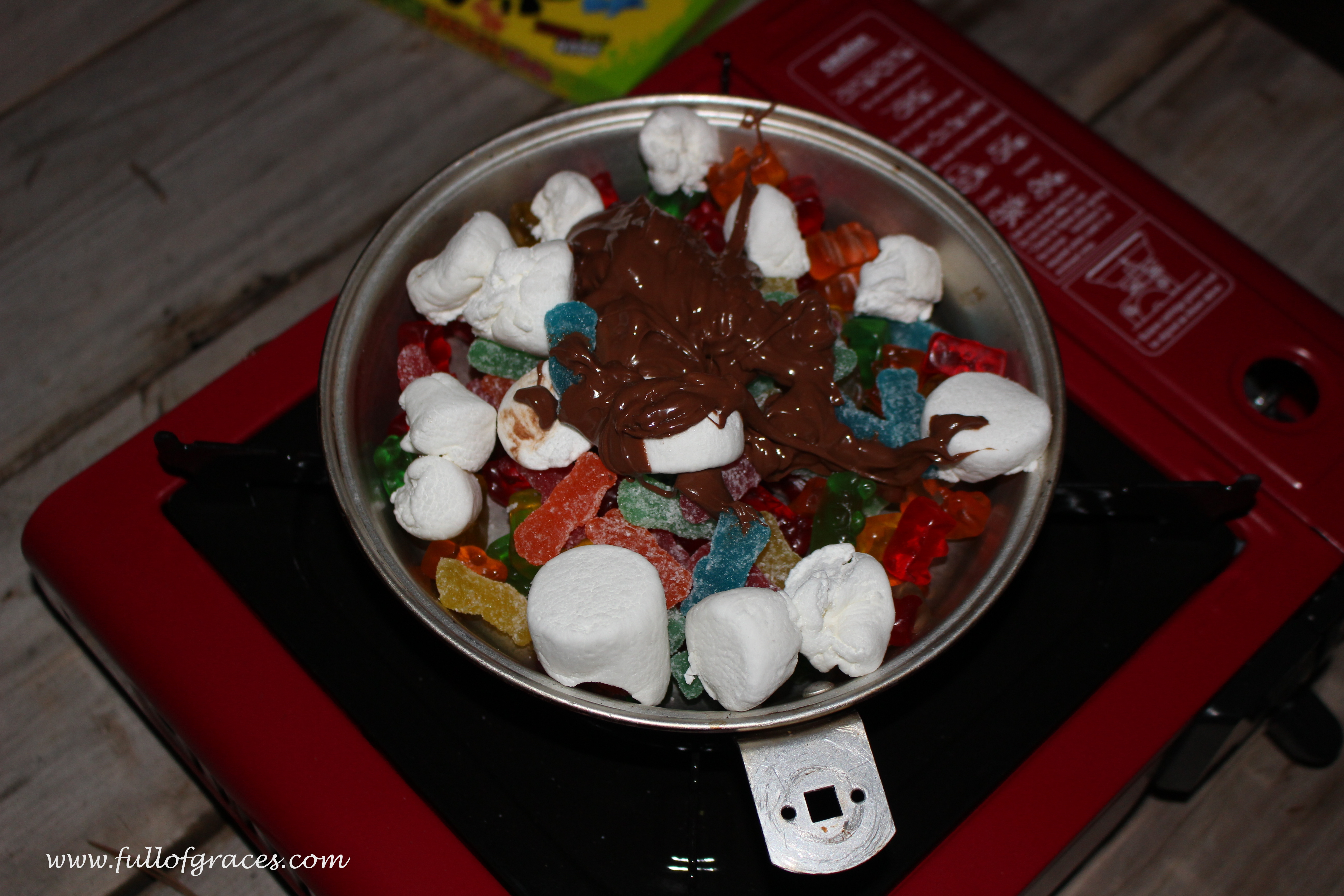
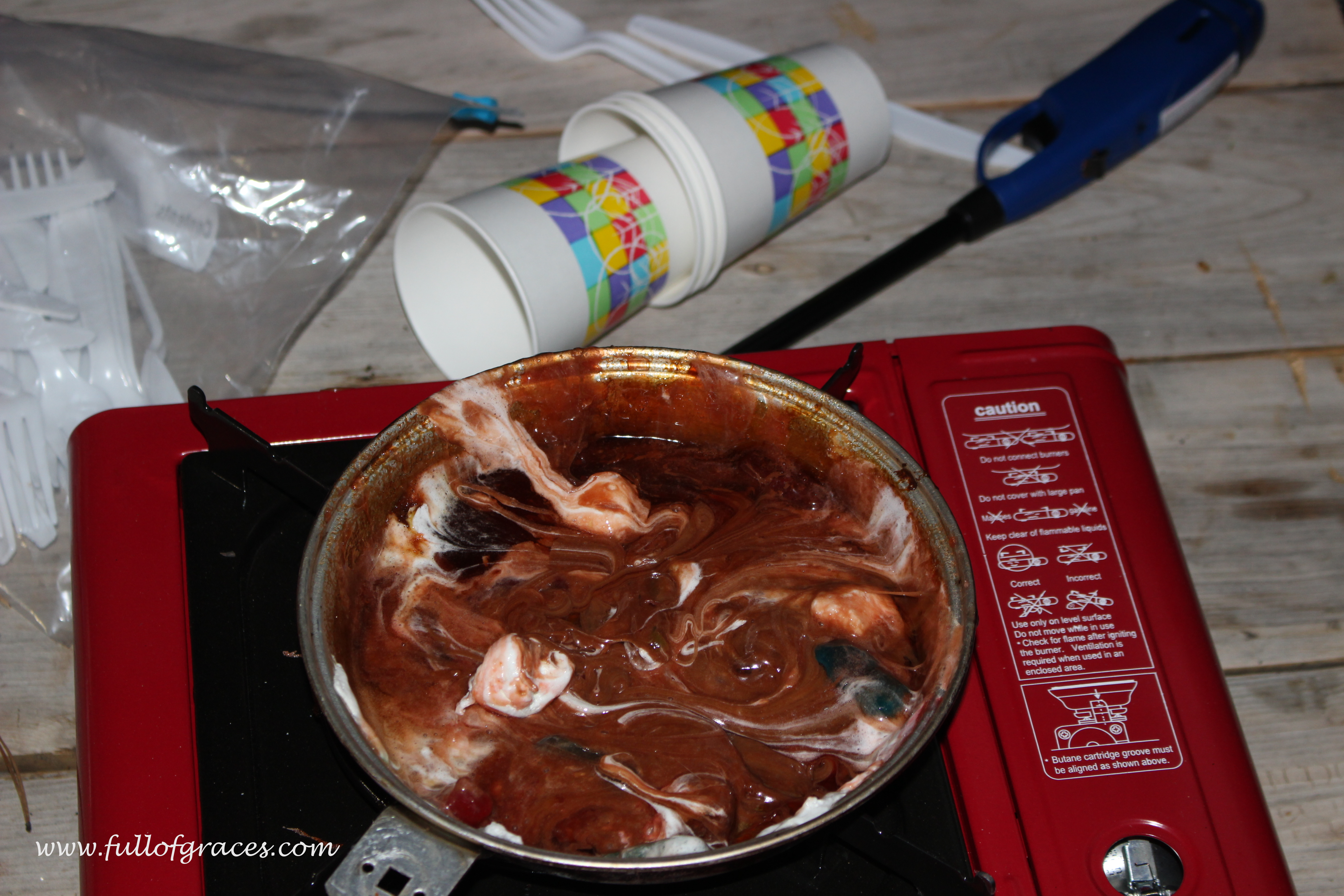
We camped with George and Angie this weekend, and you better know Gummy Bear Stew was on the menu. Any kind of candy is fair game. Our stew had Gummy Bears, Sour Patch Kids, Rolos and marshmallows.

IMG_0727 IMG_0729 IMG_0746

This is not haute cuisine. And it tastes about how you imagine—like a melted Halloween candy bowl. If you don’t eat it fast enough, it hardens into a Gummy Bear Stew lollipop. One taste and my teeth almost fell out.

But camping moms know that the food rules are a wee bit different in the woods. And not 20 minutes earlier I was the mom who yelled “Don’t give me that natural bug spray crap! The baby needs DEET!!! NOW!!!”

The kids ate that stuff up. And then bounced off into the woods with flashlights to search for windigos and stump trolls, too amped up on liquid sugar to be scared.

Dishes

At some point in my growing up years, the household chores got divided along gender lines.

My brothers did all things outside and trash related. I was in charge of the kitchen.

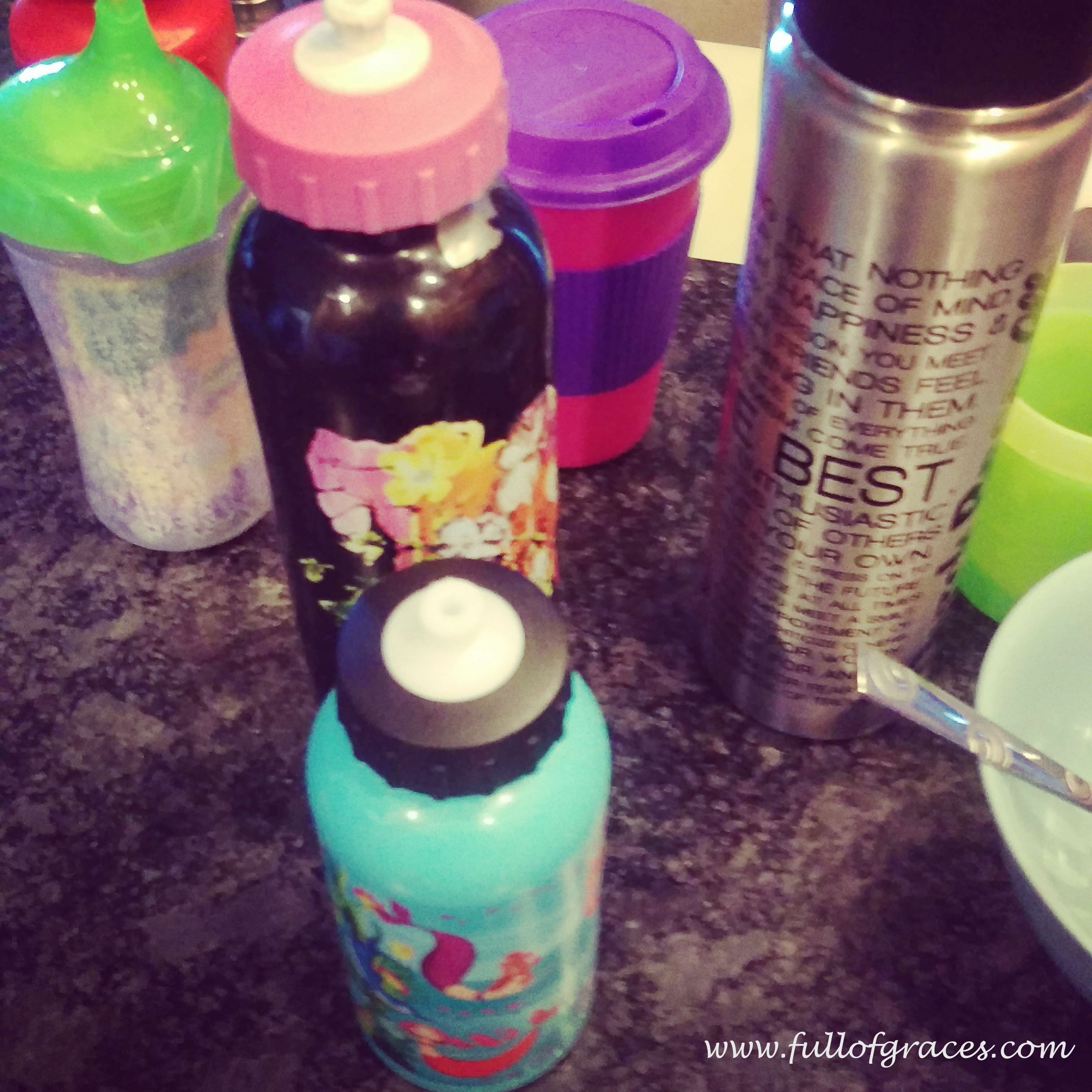
IMG_20150716_124943

Although I do find immense satisfaction in a completely clean kitchen, and no one loads a dishwasher like I can, there were moments when I was 16 that I hated it. I wanted to be in charge of trash, something that happened every other day, but my brothers were no one’s fool.

When I came back home for my first college break, they gleefully stepped aside so I could resume my duties. I wanted to at least share them with whoever had been in charge of the dishes while I was gone, but nothing doing. “It’s your job” my brother said, patting me on the back, grabbing a soda and heading for the family room.

I made a vow that in my own family, things were going to be different. None of this genderized division of labor in my home!

I thought of this last night as Shea and I made our way through For Better And For Ever, a marriage preparation guide for engaged couples. We are training to join our parish’s sponsor program, so we need to go through the book ourselves to prepare to help others navigate the pretty tough topics and questions.

This is an interesting thing to do after ten years of marriage.

Somewhere, we have similar books from our Engaged Encounter weekend. I kept them because wouldn’t it be fun to look at them in the future and remember where we started?

Yeah, or scary.

Because we were so young. And idealistic. And we really had no idea what was going to happen next.

Take for instance the division of duties. I was determined we were going to share it all. No traditional 1950s housewife over here.

Shea does dishes. I do dishes. The rule generally is the person who didn’t cook cleans the kitchen. The truth is that he will offer to do the dishes when I am just too tired. And he did them every night of all three pregnancies. I keep the kitchen clean during the day because I’m home. It’s a pretty fair trade. We both like a clean kitchen.

But I do not take out the trash. Or pick up the poops. Or water the garden, pull weeds or mow.

I make sure that Gardener Cory shows up to mow, so that’s something.

I do laundry, pay bills, vacuum and yell at the kids until they dust. I make beds and clean bathrooms and grocery shop. I master the coupon apps. I shop for shoes and clothes and school supplies. I do doctor’s appointments and manage the family calendar. I take care of sick kids and sick dogs.

Shea brings home the bacon. This is a big deal. It’s what keeps me at home, running the Command Center.

I am very happy with this arrangement. Shea is very happy. But last night we realized that we have the very thing I was determined not to have—a fairly traditional marriage.

Why wasn’t I going to have it, again?

I can’t remember.

And there you have it.

Fishsticks and Champagne

The story goes like this:

In August of 1969, my aunt and uncle were celebrating their 5th wedding anniversary on August 15 and my mom and dad were celebrating their 1st anniversary on August 17. They all lived in San Francisco, my parents having recently graduated from the University of San Francisco and my uncle finishing up law school in the city.

My mom and dad on their honeymoon, August 1968
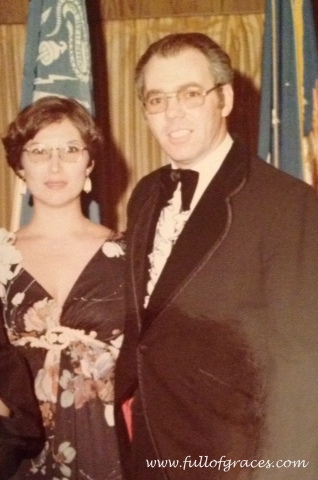
So Lesley doesn't know when this picture was taken, but I am guessing late 70s.
My aunt and uncle, late 70s.

My parents lived in a small walk-up near the university. This means is that they had a second story apartment in an already hilly city. Think stairs, indoors and outdoors. Everywhere.

This will be important later in the story.

They had no money. My mom and dad were 23, my aunt and uncle not much older. But they decided to celebrate the anniversaries together. So my mom cooked up a bunch of frozen fishsticks and someone—probably my uncle—found deeply discounted (because their labels had fallen off) bottles of champagne.

I know exactly what this party looked like, even though I was only a prayer two years in the future. I have seen the four of them like this many, many times in my life—joyful, loud, carefree. Full of laughter.

But not always making top-notch decisions. Because, fishsticks. And champagne. A combo that has trouble written all over it, like prosciutto and margaritas, or brie and beer.

Sure enough, by the end of the night, they were sideways. My dad was getting reacquainted with his fishsticks. My aunt couldn’t manage the stairs down the hill to the street in an upright position. She slid down them on her bum, howling with laughter all the way. Of course.

Then some poor fool had the audacity to cut my uncle off at a stop sign.  The way he tells it, he just barely got hold of the back of her pants to stop her tumbling out the window after she rolled it down to give the guy a piece of her mind.

This night is legend in our family, part of the fabric that holds us all together. Not just how silly and funny it was, but how my uncle’s eyes still twinkle when he tells the part about my aunt. Or the lesson we absorbed about the importance of celebrating wedding anniversaries, even with fishsticks. How my mom tilts her chin defiantly and says “That’s all we had, so that’s what we did!”

This August, they will celebrate their 51st and 47th anniversaries.

Last week, we were in Canada with my cousin and her family for their 11th anniversary. It was the last day of a visit that had ten of us staying in one house—six kids under the age of 10. A big night out was not in the cards.

But there was champagne in the fridge.

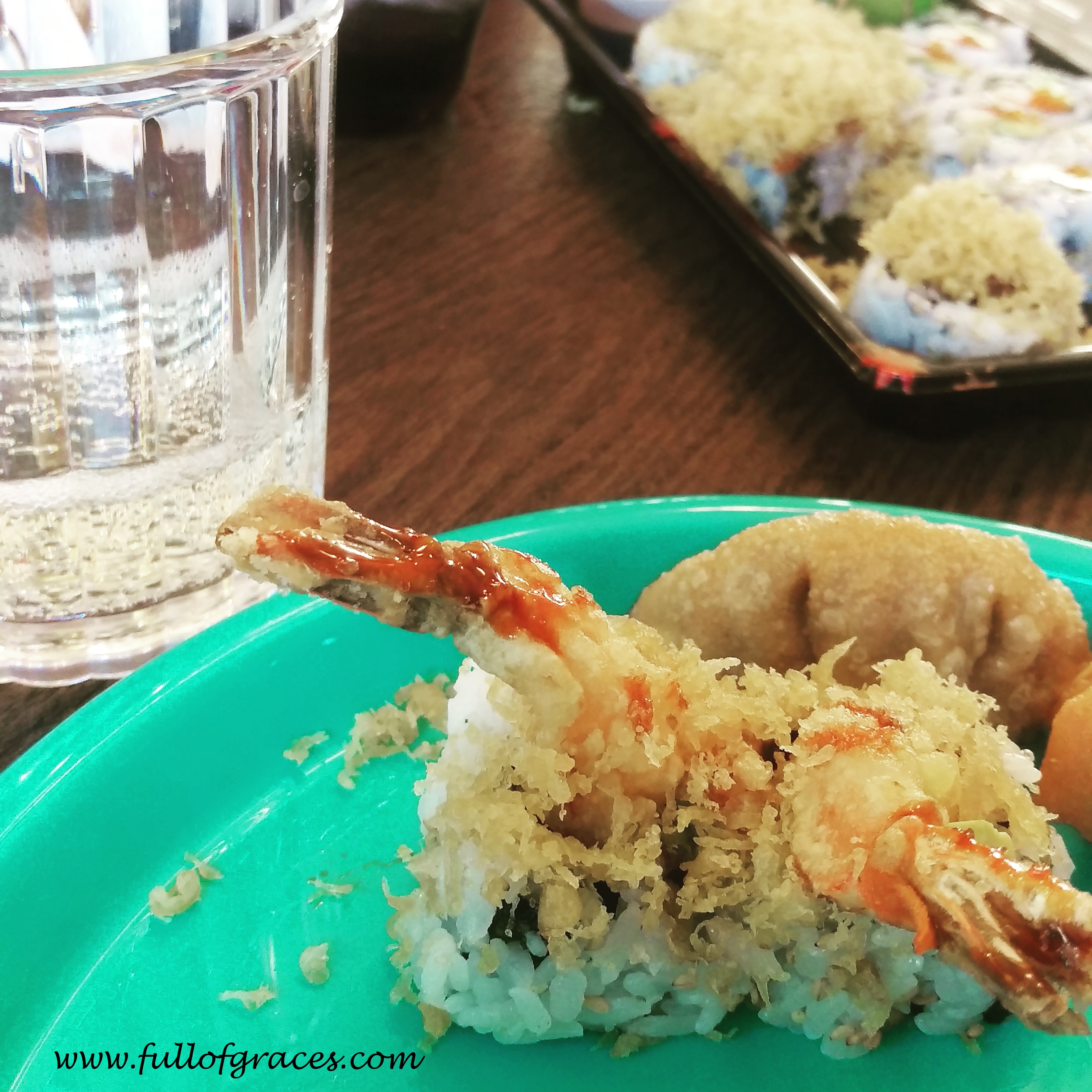
We contemplated fishsticks. We really did. For a good half second. And then we got our feet under us and ordered sushi. Luckily, we are twenty years older than our parents were on that fishstick night and more financially secure. We crammed everyone around the dining room table, poured the champagne into half-pints because we couldn’t find any Solo cups, and went at it.

IMG_20150703_192155

Alas, we only had one bottle of champagne, so the night was tame. No sliding down the stairs required.

IMG_20150703_192126

Yes, a tiara is normal Friday night attire for Lesley. It’s one of the reasons I love her so much!

Guest Post: Unashamed by Jennifer

Good morning friends. Our support of Maternal Mental Health Awareness Month continues today with a guest post from our good friend Jennifer. 

IMG_8731 (1)

My name is Jennifer, and I struggle with depression.

I have a family history with mental health issues and a personal history of depression from before I had children. Because of my risk factors, my husband, Nate, and I were proactive with a plan to ward off postpartum depression after the birth of my first son. Our efforts paid off and we were successful. Unfortunately, after my second son was born I developed post-partum depression. He is almost two years old and I still struggle.

I think that because I did well mentally after the birth of my first son, Jacob, I let my guard down with my second son, Andrew. I did not have a plan in place for the post partum period when he was born. Andrew was born at 36 weeks gestation and this was a factor that contributed to my PPD. Though I was technically in labor, the hospital let Nate and I choose whether to go home or have my water broken. For various reasons we chose the latter. Andrew’s birth was very quick and he was small so he ended up being born with fluid in his lungs (Transient Tachypnea of the Newborn) and became a NICU baby. He spent a week there before being discharged. Sometimes I still catch myself playing the “what if” game. I know it’s an exercise in futility but I can’t help it. I will never know if his NICU stay could have been avoided had I’d just gone home that day instead of having my water broken. The guilt over our decision was something that really ate away at me when Andrew was a baby.

I turned 30 when Andrew was not quite two months old and I was not feeling it. Not because I was dreading turning 30, but because I was just starting to admit to myself that perhaps I was experiencing more than baby blues. I just wasn’t in a celebratory place. I remember telling Nate that I feared I had PPD but as I told him I also tried to minimize my feelings. I was ashamed of the place I was in. I think our conversation alerted my husband to the fact that I might be having a problem but we both were in a state of denial over it.

The height of my PPD was when Andrew was four months old, both boys were sick, Nate was working 80-hour work weeks, and Andrew would not take a bottle. I think his refusal of the bottle, and my subsequent inability to get a break, was a big factor in the severity of my PPD. Part of me began to resent nursing Andrew because I felt leashed to him and, as vicious cycles go, I would then be consumed with guilt for feeling that way. As I took care of my sons I alternated between constantly wanting to take a nap (something my well intentioned mother encouraged until I told her it was because I was depressed) and envisioning myself getting up and walking out the door while leaving the boys behind. I never wanted to hurt them or myself but the vision of walking out was so very real that I could practically feel the action of doing it. And that scared me. A lot. It was my sharing this impulse that made Nate truly understand that I was having a problem. Once he saw this, he immediately went into action mode and together we changed things to make sure I was getting a break, getting exercise, and other little things that did make a difference. Having the number to a Postpartum Support International coordinator ready on my phone helped too though I never ended up calling. In a strange way, simply having the number at my fingertips was enough.

December 2013 was my low point and through a lot of work and support from Nate, family, and friends, I am doing better. I still have days and weeks where I am inexplicably sad but I’m a work in progress. I have my list of things that help ward off my depression (exercise and duty free time are most helpful) and I know my red flags that signal the clouds are rolling in. I’ve also decided that I need to see a counselor. I’m doing these things to keep myself healthy and to help my family be happier. But I’m also trying to be proactive about my mental health because I have a strong desire for a third child and I am afraid I’ll have PPD again. I’m not ashamed of my history, but I don’t want to be caught unprepared again.

I also want to say this. If you think you may be experiencing PPD, don’t try to downplay it. Your feelings are important and you need to be heard. Tell people, a lot of people. I ended up telling a lot of people what I was experiencing and I’m glad. Sharing my story created a new village for me to lean on and be part of. On the flip side, if someone you know tells you they “may be” having baby blues or PPD, drop everything and listen. Take them seriously and get them help. Don’t assume someone else will.

The struggle is real but we do not need to struggle alone.

If you need immediate help, please call the National Suicide Hotline at 1-800-273-TALK (8255)

If you are looking for pregnancy or postpartum support and local resources, please call or email us:

Call PSI Warmline (English & Spanish) 1-800-944-4PPD (4773)

Email support@postpartum.net

PSI Maternal Mental Health Awareness Month Blog Hop

The Wasteland

My dear and beloved T.S. Eliot begins his epic poem, “The Wasteland” with the line, “April is the cruelest month,” and for me, the end of April through the beginning of May feels like a wasteland.

On April 23, 2013, my dad received a radiation treatment that was a last resort for us, for him. Beginning in October of 2012, as his lymphoma spread, his chemo treatments failed. In the month of April, we received two big blows. We were hoping that he would go to San Diego for stem cell therapy, a treatment that held the hopes of really good results. The day before he and my mom were supposed to leave, they got the news that his cancer was growing, rendering him ineligible for the treatment. I was with my parents when they got the call and it was the first time, during his whole bout with cancer that I had seen my dad truly break down and cry.

The second blow came the day before the radiation shot. The hospital called to inform him that this particular treatment isn’t covered by Medicare, and would cost $40,000. They then asked if he would like to go ahead with the treatment. For the second time, my father cried. He told us that he didn’t want to use that much money.  He cried in the kitchen where I had eaten every breakfast of my childhood. Where he fixed chocolate malts in the summertime. At the table where we laughed. Where we fought. Where we three now cried together.

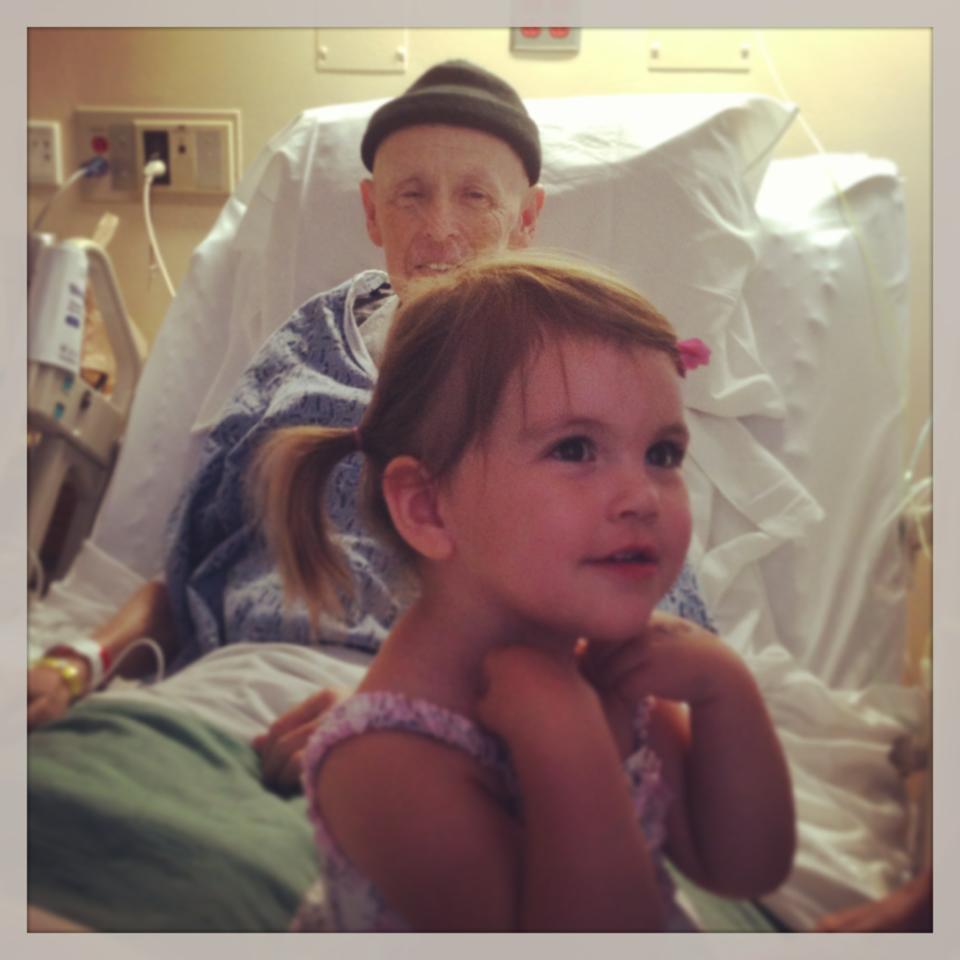
The dates are hard for me. On the 23rd he got that shot, which had the most negative of side effects. On the 28th, we went to see him in the hospital where he was in treatment for extreme pain. Mazie and Violet picked him a white rose and brought it. His face lit up with joy to see those girls. May 3rd, he collapsed at home and my mom realized she couldn’t care for him alone and he went back to the hospital. May 5th, a CT Scan showed lung caner and we stopped all treatment. May 7th, we decided to bring him home. May 9th, he left the hospital. May 11th, he left us.

m and dad

v and dad

The days leading up to April 23rd, then to May 11th, wear at my soul. I feel physically different. My anxiety picks up. It’s hard to breathe sometimes. My body aches. I told my friend and dance instructor that my muscles are so tight lately and that even though I’m faithfully in yoga classes, my flexibility seems to be getting worse. “It’s because you’re not releasing.” He said matter-of-factly. “What do you mean?” I asked. “You know.” he said, “Emotionally and physically. You can’t do it right now.” And he’s right. Don’t you love friends who know? I feel like if I release these emotions, I’ll drown.

But what is the lesson? What I am learning is to be gentle with myself. I don’t fake being ok. I don’t overcompensate with loud laughter or a huge smile. And that’s all right. My friends who know are loving me right through this.  Many of us feel like we always have to be strong, like we can’t be the ones who break down.  But right now, I am broken, and that is ok.

I spend my days not stressing about what didn’t get done. Right now, that stress is too much for me. My girls and I take longer at dinner, listen to French music, dine by candlelight. In my sadness, I delight in them.

dinner

Many people tack on to their grief advice the phrase, “your dad wouldn’t want you to be sad,” and I hate that. Because deep down in my heart, I think he would want us to be a little sad. Who wants to be forgotten? Who wants to be not missed when they’re gone? What I don’t do is allow my grief to stop me from living. There can still be smiles among the tears. There can still be bursts of light in the darkness. We do a poor job of thinking that things must be black or white. There are not only two choices.

So during these 18 days from April 23rd to May 11th, I’m remembering that. I take my girls on outings and we have fun, but I also allow a space for my sadness. We talk about things that Zsa-Zsa would have loved and I let them see the tears flow from my eyes. We go to Disneyland. We opt for a little longer of a walk and push bedtime back 15 minutes. We live gently. But at night, when the house is quiet, the hole that he left in my heart opens up and I feel utterly lost in a world that just doesn’t make sense without my daddy.

If you are grieving, if you are struggling emotionally, please be gentle with yourself. Allow yourself a space to grieve. Forgive yourself for your moments of sadness or anger. Embrace your struggle. Avoid people with whom you have to “fake it.” If you take a hard look at it, they probably aren’t your true friends, anyway. Surround yourself with your definition of beauty, with things that make you happy. Get a latte. Or a beer. Or a vodka gimlet (the drink Dad and I had together in New Orleans) and raise your glass to us. Smile and cry. And know that the sun will rise again tomorrow.
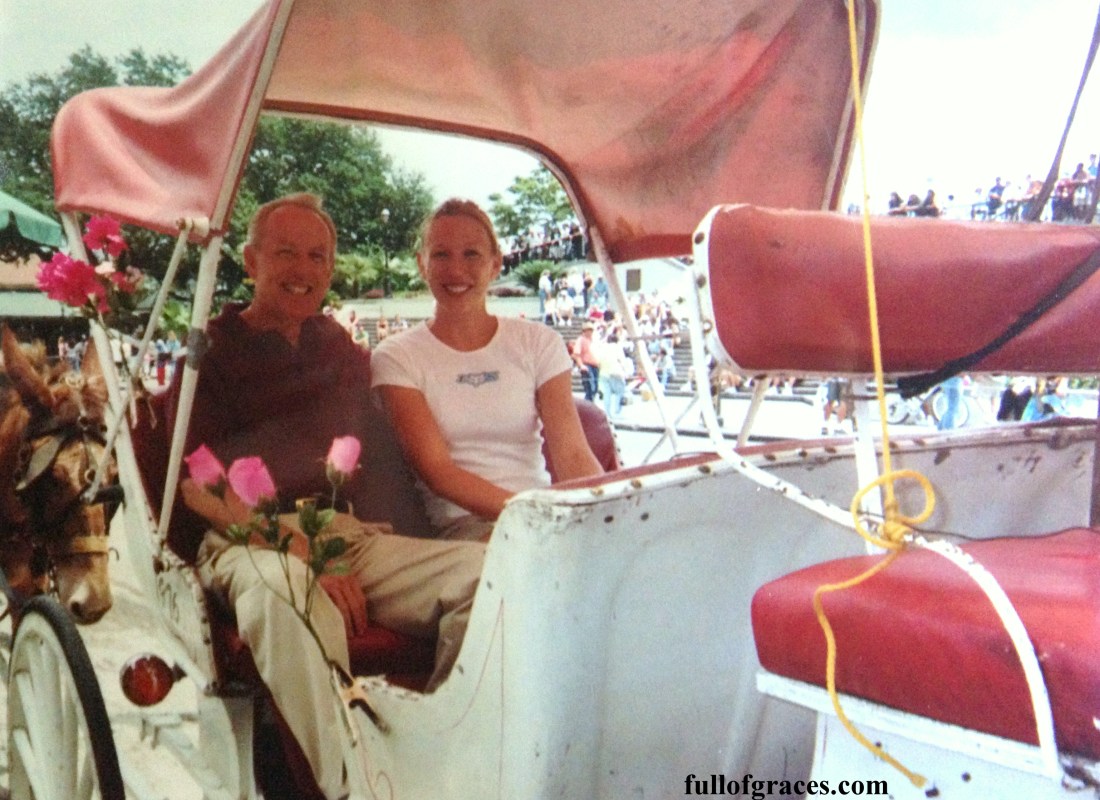
photo-20