Natural All-Purpose Cleaner ~ Dana

822dad0ab36011e296f222000a9f4dd8_7

After I started making my own laundry detergent, the homemade, all-natural bug bit me.  I researched basic kitchen and bathroom cleaners and found that the chemicals used for the production of non-natural cleaning products include neurotoxins, carcinogens, heavy metals, and depressants.  They are great at cleaning up messes, but can also cause respiratory problems, allergic reactions, cancers, trigger asthmatic attacks, and reproductive problems (GrabGreenHome.com).   Ew.  I don’t want that stuff in my home, around my kids, and touching our food.

An easy non-toxic cleaner I use every day is this simple all-purpose cleaner from wellnessmama.com.   It’s a great kitchen cleaner, bathroom cleaner, and can it even disinfect toys after the kids have been sick.  And unlike its commercial counterparts, you do not have to rinse it off of the countertop. That little-known nugget is in the fine print on most cleaners.  Yikes.

If you’ve made the laundry soap that we posted last week, you already have a couple of the ingredients.

In a spray bottle, mix:

1 tsp borax

1/2 tsp washing soda

1 tsp liquid castile soap

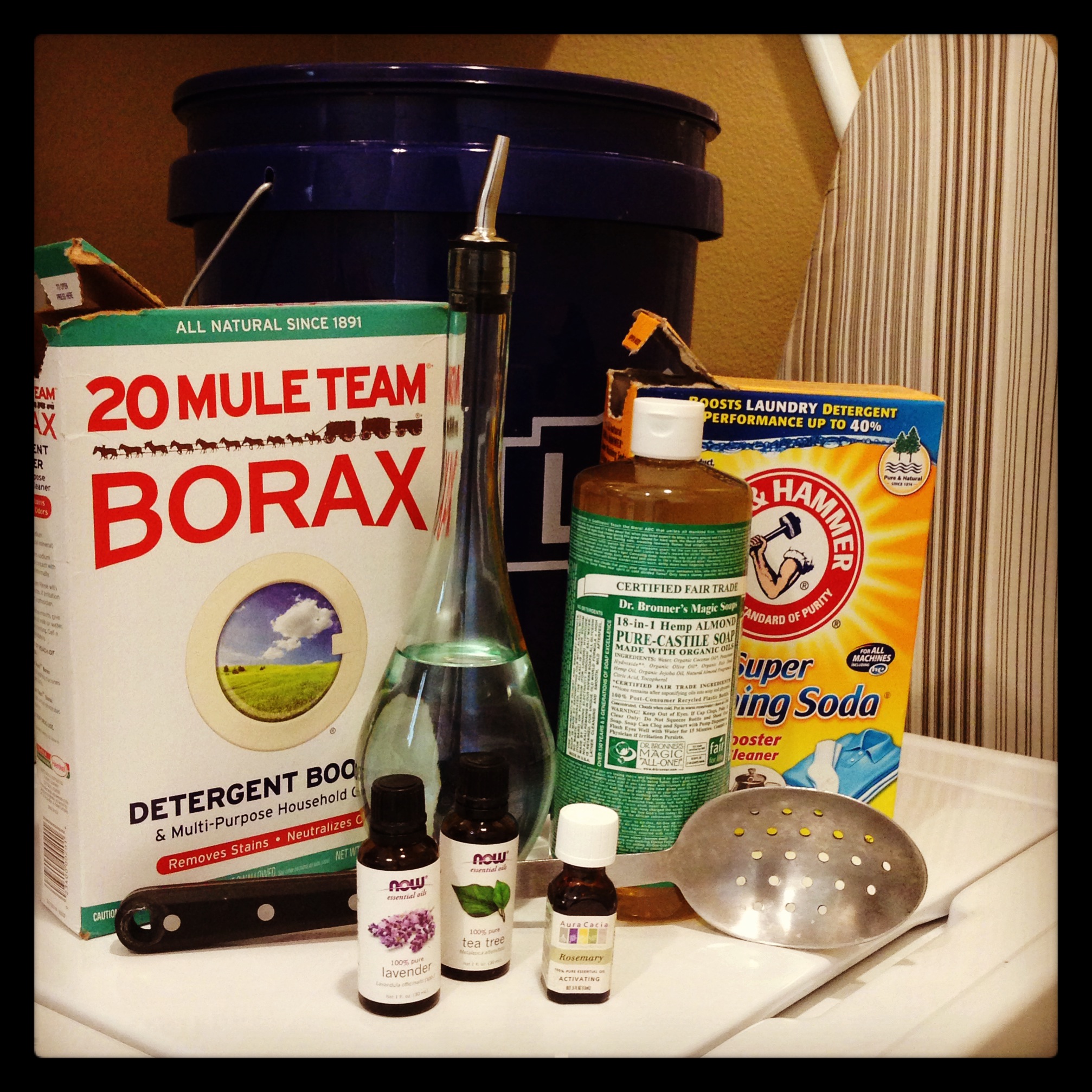
Essential oils – I use 4 drops lemon (antiseptic), 4 drops lavender (antiseptic and anti-viral), and 10 drops orange (antiseptic)

Add 2 cups of warm water.  Distilled is best, but any water that has been boiled will work. Cover bottle and shake well. Use as needed.

The essential oils can be purchased at most health food stores, like Clarks Nutrition or Sprouts here in Southern California.  Sometimes if I’m not going to make it to one of these stores for a while, I order the oils on Amazon.com, too.

One thing that I am discovering with most of my homemade cleaners is that I need a bit more elbow grease when using them than when I clean with chemical cleaners.  And that makes sense, doesn’t it?  So by using it, you’ll be healthier and your arms will be toned.

For tougher jobs like the stovetop and microwave, I keep a spray bottle filled with half distilled or boiled water and half white vinegar.  The acidity of the vinegar breaks down grease better than the all-purpose cleaner.  And don’t worry; the vinegar smell doesn’t last long.  I promise.

A Good Mammoth ~ Jen

Perris_Valley-20130428-00184

The other night Gabriel was reading to me. It was a “free read” night and he had picked a Step up to Reading version of Ice Age 3.

We’re on the bed, and I’m trying to nurse Annie, who is treating me like a free refill bar at a fast food restaurant. I’m listening-ish. He reads that Manny, the Mammoth dad, and his teenage daughter Peaches, don’t really get along. Peaches yells at her dad “You can’t control my life!” Manny yells back “I’m your dad! It’s my job to control your life!”

Yikes. This needs a clarification, I think as I wrestle Annie to the floor and send her off to Dada.

But before I can say a word, Gabriel says “I think they are both wrong.”

“What do you mean?”

“Peaches is wrong” he tells me. “If she’s going to live with her dad, she has to follow his rules.”

“Yes.”

“And Manny is wrong. It’s not his job to control her life.”

“It’s not?”

“No. It’s his job to raise her to be a good mammoth.”

Oh man.

We don’t have teenagers yet. The closest thing we have is my friend’s nine year old. But they are coming, a giant clump of kids who will go through puberty within five years of each other, God help us.

I was not an easy teenager. I was smart and mouthy. Some would call me deceptive, but I would say that I ran excellent public relations campaigns. My parents were on a need to know basis. They needed to know about my excellent grades, outstanding athletic accomplishments, stellar babysitting reviews. What I did on Saturday night was my affair.

My father says if there is any justice in the world (when he says it you can hear the italics, I promise), I will get what I gave times three.

I survived with a clean record and all my limbs intact for one good reason: my parents did a good job. They laid a solid foundation of values and fear—you need both to parent effectively, in my opinion. When good sense didn’t stop me from being a dumbass, fear of the consequences usually did. Or at least prompted me to have a back up plan.

Because my parents were not playing around. I once got put on restriction an entire semester for being the designated driver. I argued this was unfair based on the fact that I was being the responsible one. They argued that we were all 16 and if they had their way we’d be locked up in a convent, so I should shut my mouth while I was ahead.

I understand a bit now how hard it is to raise good kids. Sometimes, every fiber of my being wants to raise safe kids in pretty cages. I’ve seen parents try to control their children into safe adulthood by anticipating every pitfall and negotiating every hardship.

But I know what that looks like at age 16—kids who are champion whiners, have no initiative and no ability to solve their own problems. If I had a dime for every time my dad told one of us to “use your head”, I’d be a rich woman, but that was much better than “I’ll do it for you”.

One of the most famous stories in our family goes like this: when my brother was in high school, he got a flat tire on the 405 freeway during rush hour traffic. He managed to get the truck off the freeway, but it was so old the spare tire was long gone. He called my dad to get some help.  My dad listened to him and said “Call AAA and have it towed. I’m busy.” Click.

How many parents would have the guts to do this today? Strand your 17 year old? Not really stranded, because he had a AAA card in his wallet. But he had to handle the whole thing himself, which he did. To this day, when one of us hits a place where we don’t know what to do next, someone will yell “Call AAA and have it towed!”

As much as we give my dad a hard time, he was right about making us figure it out. And now, here we all are, successful adults.

So I’m going to try to remember: At some point it won’t be my job to control, negotiate and anticipate anymore. As they get older, it’s my job to teach them to do these things for themselves. I want them to go out in the world and be happy, contributing, moral adults.

I want them to be good mammoths.

Footloose and Chemical Free ~ Dana


Since cancer has stricken both of our families with such great force, Jen and I decided, almost at the same time, to begin eliminating chemicals from our homes.  One day last summer she mentioned that she was making her own laundry detergent.  I had been researching it too, but just hadn’t gotten it all together to make the leap.  I think part of me was afraid that it wouldn’t work, or that my clothes would smell funky or get ruined.  I smelled the shirt she was wearing at the time, which had been washed in homemade detergent, and it smelled just fine.  And it didn’t look funky.

Not only is making your own detergent simple, it’s also cost-effective.  The recipe that I use gets mixed up in a 5-gallon paint bucket from the hardware store, which cost me $1.99.  I purchased 55oz of the super washing soda for $3.24 (lasts 6 batches) and 76 oz of borax for $4.53 (19 batches).  The bar of Fels-Naptha cost $.97.  Grand total:  $10.73… for 10 gallons of detergent! This bucket has lasted me about 3 months so far and I’d say I’m less than half-way through.  Jen’s niece Teresa made a bucket of it to take to college in August and is still using it.  That beats buying a 100oz of Tide for $16.49 every month or so.

As I’ve branched out into other soaps and cleaners, I’ve found that many natural cleaners and soaps don’t suds up as much as their chemical counterparts.  But more suds doesn’t mean cleaner, despite advertising that persuades us that they do. In fact, manufacturers have to add more chemicals to make more suds.

And we know that it’s not safe to inhale or ingest cleaners, but there are more imminent dangers associated with using these products.  Many cleaners and air-fresheners are specifically linked with respiratory disease and cancer.  You can read a report from the American Lung Association here and a report from the Organic Consumers Association here

So making my own is cheaper and healthier?  I’m in.  The recipe that I use is a little bit more time consuming to make.  It probably took me about 20 minutes.  The other two recipes we’ve listed are simply combining ingredients and stirring.

Cheaper, healthier, and easy to make?  You could be in, too.
Laundry Ingredients

Laundry Detergent Recipes

Homemade Liquid Laundry Soap #1 – via duggarsblog.blogspot.com

Ingredients:

4  Cups  hot tap water

1  Fels-Naptha soap bar

1 Cup  Super Washing Soda

½ Cup 20 Mule Team Borax

Directions:

1.  Grate bar of soap and add to saucepan with water. Stir continually over medium-low heat until soap dissolves and is melted.

2.  Fill a 5-gallon bucket half full of hot tap water. Add melted soap, washing soda and Borax. Stir well until all powder is dissolved. Fill bucket to top with more hot water. Stir, cover and let sit overnight to thicken.

3.  Stir and fill a used, clean, laundry soap dispenser half full with soap and then fill rest of way with water. Shake before each use. (will gel)

4.  Optional: You can add 10-15 drops of essential oil per 2 gallons. Add once soap has cooled. Ideas: lavender, rosemary, tea tree oil.

Yield: 10 gallons.

Top Load Machines use 5/8 Cup per load

Front Load Machines use 1/4 Cup per load

Homemade Liquid Laundry Soap #2 – via mymerrymessylife.com

Ingredients:

2 1-gallon containers in which to store your finished detergent (old laundry jug, or vinegar jug)

3/4 cup Dr. Bronner’s Liquid Castile Soap (For laundry, I like to use the lavender, almond, and citrus varieties)

1/2 cup Super Washing Soda

1/2 cup 20 Mule Team Borax

20-50 drops of lavender, tea tree, or citrus essential oil (optional)

Directions:

1.  Add baking soda and super washing soda into a two-gallon bucket.

2.  Cover with hot tap water and stir until dissolved.

3.  Once dissolved, fill to the top with water (2 gallons).

4.  Add the castile soap at the end (or it will get very bubbly).

5.  Stir with a large spoon to mix in the soap and add the essential oils if you desire.

Yield:  2 Gallons

Top Load Machines use 1/3 cup per load

Free Printable Label: https://docs.google.com/file/d/0B7apRG38zbD-VWlWZ2VXSmdVSUk/edit?pli=1

Homemade Powder Laundry Detergent  – via my cousin Donna Lawrence

Ingredients:

1 bar Fels-Naptha or a bar of Dr. Bronner’s Magic soap (all-in-one hemp lavender smells really nice!)

2 Cups of 20 Mule Team Borax

2 Cups Super Washing Soda

1/2 cup Oxiclean Free.

Directions:

1.  Grate bar of soap

2.  Combine all ingredients and store in an airtight container.

Front Load Machines use 1 Tbsp. per load

Top Load Machines use 2 Tbsp. per load

Note:  Donna adds that she uses just 1 Tbsp. per load, but that she has very soft water.

With all of these recipes, we add a glug of white vinegar in the fabric softener dispenser!  Keeps clothes soft naturally!


We Are Not Alone ~ Guest Post

My friend and I had our babies five weeks apart. Three years later, I was driving home from work when she called to tell me that her son had been diagnosed with Autism. In the two years since diagnosis, they have walked the path of grief, acceptance and advocacy. They are so brave.

One day she told me she was done with people who didn’t get it, were in denial or tried to change the topic. “This is our reality. There’s no more question. If people can’t handle it, I can’t handle them.”  It was a hard moment. But she was telling me to get in her space. The journey had changed from diagnosis to treatment and there was work to be done. 

In honor of Autism Awareness Month, we are pleased to welcome her to our blog.

~~~~~~~~~~

Aaron

I am a 39 year-old married mother of a 4 ½ year old son with autism. He is my only child.

The first question people ask when they hear my son has autism: “Is he like mildly or severely autistic?” They need a label. I have been asked, “Is he like rain man? Does he sit in the corner and rock? Or is he just a little odd?” Maybe knowing the severity of the autism determines the kind of support they will give? Maybe the response determines how they are going to feel about my son’s autism?

The question of severity is almost always awkward for me. What do I say? How much detail do I give? Should I tell them my son uses echolalia (the involuntary and immediate repetition of words or sounds made by other people)? Do I say he uses scripts from his favorite TV shows to communicate? Do I share that he didn’t sleep more then 2-3 hours in the first 2½ years of his life and that his receptive/expressive language is at a 2 year-old level? What would you say if it were your child?

Should I say he is moderately to severely autistic? My son has been assessed by multiple neurologists, psychologists, ABA therapists, ABA supervisors, two primary physicians, OT therapists, PT therapists, special education teachers and speech therapists. Not a single one of these highly trained professionals can or will answer the question of severity, so how can I answer it?

The reaction to the “label” or description of symptoms will indicate how the rest of the conversation will go.  Keep in mind I am talking about colleagues, friends and even family members. Some people make me feel loved and supported, while others leave me feeling isolated, frustrated and alone.

The following are some comments I HATE to hear the most:

  • God only gives you what you can handle.” OK, but this is not helpful when your heart is broken and every day feels like a struggle.
  • “There’s a reason for everything.” I am a very spiritual person and I do feel there is a plan. However the comment feels lazy and makes the other person feel better.
  • “Your son is so lucky to have you.” I can’t pinpoint why this one hurts, but it does. Maybe it’s because I am the lucky one? No matter how hard this journey gets, my heart overflows with love and gratitude for my beautiful baby boy.
  • “There are so many therapies now and things you can do for those kids. He’s going to be fine.” These words minimize the whole experience in one swoop.
  • “Oh that’s no big deal, my kid does that.” UGH. No, your kid doesn’t do that. I want to say “Really? When you ask your child the most basic of questions, do they have the ABILITY to answer you? Are they 4 ½ years old and still in a diaper? Are you able to take them to a family party without your child going into an anxious frenzy that requires two days of recovery? Do they echo back everything you say?” I could go on and on. When someone says, “Eh, my kid does that” my heart drops. The subtext of the comment is, “Yeah, what you’re saying is no big deal. Stop whining. I don’t want to hear it. You’re a drama queen. Get over it.”

And sometimes people say beautiful things, but if it’s delivered with a “just stop whining” implication, then the words hurt.

When people make comments that sting, I remind myself people do the best they can. However, that person and their poorly thought out comments create a palpable distance. I slink away from the relationship. I realize it is my job to make that person feel better about my child’s disability. And trust me, I don’t have the time to make you feel better about my child’s struggle. At one time I did and said anything to make other people feel better about the autism, but now I have no time for that nonsense.

Here is a list of things I find most helpful:

  • “We love you and we are here for you.” Coupled with a hug, I LOVE this one!
  •  “Is there anything I can do to help or make things easier?”
  •  “That sucks!” A heart-felt “That sucks” does wonders.
  • “This must be hard.” YES it is, and your acknowledgement of the challenge means the world to me.
  • “It sounds like you guys are doing a good job.” Please know this means so much because every single day I worry I am not doing enough or more so, that I am not enough.
  • “I can’t imagine how hard that must be.” Thank you for being honest, because the truth is that unless you live with a child who has special needs you do not know what the experience is like. Your honesty is refreshing.

The most loving, helpful responses are from people who communicate to us they are simply willing to be a witness to our family’s journey and struggle.

They don’t look away because it’s too painful. They have a willingness to sit with the pain we are feeling.

They put their arms around us and tell us we are not alone.

Aaron 2

Planting Trees ~ Dana

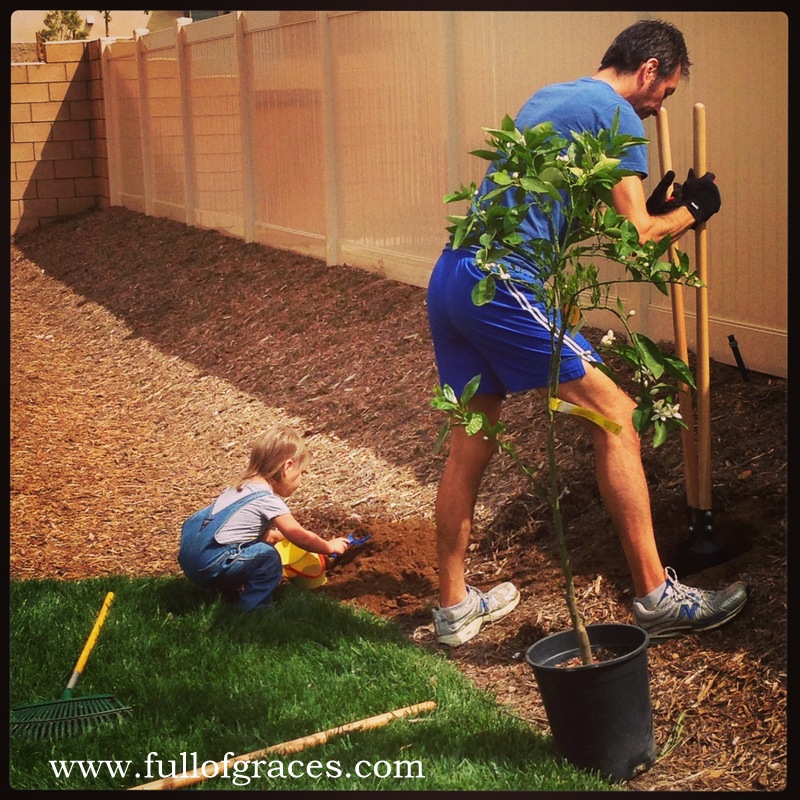
One thing that I’ll say about my in-laws is that when they go, they go large.  So when we told them that we wanted to put some fruit trees in our new backyard, they got us some.  Nine to be exact.  Nine fruit trees for my husband Hansel’s birthday back in February.

These poor little trees sat, waiting to be planted, for two months until finally last weekend the weather was warm enough and we had time enough to put them in the ground.  It was quite an undertaking.  There were ten trees all-together, plus three lavender bushes, two salvia bushes, a lilac bush, and no less that sixteen little yellow annual flowers that I had bought that morning to help accent the bushes.  What a wonderful idea!

photo (3)

With post-digger in hand, we (and by we I mean he) started the planting around 11:00.  I mean really, how long could planting 10 trees take?

 photo (4)

The answer is about six hours.  About half way through, when Hansel was taking a much-deserved break, I thought I’d get in on the fun, too.  But when I couldn’t really lift the post-digger, I decided that the little yellow annuals were just my speed, in between playing with the baby, feeding the toddler, and hunting ladybugs.

photo (2)

So now we’ve got an even prettier backyard, and I love the thought of watching these trees grow.  They are just another physical reminder that we are planting our roots here.  And that feels so good.  It’s been a long time since I’ve had real roots somewhere.

Up until we got married five years ago, I hadn’t lived in one place for more than two years since I moved out of my parents’ house to go to college at the age of seventeen (in 1993, y’all).  The first house that my husband and I lived in was nice, but it never really felt like home to me.  But this place.  This place is my beautiful home.  My children are happy here.  I can put up my feet in my backyard and sip a glass of sweet tea.  In fact, I’m writing this outside right now, smelling the orange blossoms, my skin warming in the sun, and the roots of my trees anchoring themselves down in the beautiful dirt.

photo (1)